


A true treasure of nature, vitamin C or ascorbic acid is famous in cosmetics for its anti-aging antioxidant properties that directly play a role in preventing skin aging and improving its appearance. Acting as an immune system booster, it is also essential for the proper functioning of our body and overall health.
Discover its various effects on the skin and its many other benefits below!
What is vitamin C?
A famous cosmetic active, vitamin C is originally a water-soluble vitamin that enables the production of collagen, an essential protein for the proper development of the body and the organism in general (water, calcium, minerals, bones, ligaments).
Did you know? Vitamin C is not naturally present in the body! Humans are unable to synthesize vitamin C; over time, we have lost the ability to produce the enzyme necessary for its production and storage. It is therefore obtained from food sources such as citrus fruits and leafy green vegetables. However, the absorption of vitamin C taken orally through food remains quite limited and can therefore lead to a deficiency. In this case, supplementation in the form of vitamin C dietary supplements can be beneficial. Furthermore, the topical application (on the face) of cosmetic vitamin C in the form of a cream or serum, for example, is essential to enjoy all its benefits and observe real results.
Vitamin C in cosmetics can be of synthetic or natural origin. Synthetic vitamin C, which is found in most skincare products, is generally present in the form of L-ascorbic acid. It can also be found in the form of calcium ascorbate, magnesium ascorbate, sodium ascorbate, sodium ascorbyl phosphate, etc.
Natural vitamin C, on the other hand, is generally found in citrus fruits, berries, and certain vegetables. It also contains powerful nutrients that give it incomparable potency. Therefore, a healthy and balanced diet rich in fruits and vegetables is essential for a natural supply of vitamin C and to avoid a potential deficiency!
In terms of chemical structure, natural vitamin C is similar to synthetic vitamin C. However, clinical studies show that natural vitamins can prove to be even more powerful.
What is the role of vitamin C?
Vitamin C plays an essential overall role for the body, more specifically for metabolism. Indeed, as an antioxidant agent, it helps fight the risks of free radicals, which are aggressive to our skin and cells. These generate what is known as "oxidative stress". Vitamin C thus helps us maintain beautiful skin as well as a radiant and even complexion!
But its role does not stop there; it is also beneficial for health:
The role of vitamin C on health
By working together with vitamin E to fight the free radicals produced by the body when it is subjected to external aggressions such as stress, pollution, tobacco, alcohol, or even UV rays, vitamin C helps protect the skin and slow down the skin aging process.
Indeed, when the skin is exposed to this type of external aggressions and various stresses, reactive oxygen species (ROS) are released. To protect itself from these ROS, the skin is equipped with a complex enzymatic and antioxidant system. Among these antioxidants, we find the famous vitamin C.
Vitamin C also acts on collagen production, which brings real results in terms of skin elasticity and the reduction of signs of aging. It helps promote healing, among other things.
Furthermore, vitamin C helps our body, and more specifically the intestine, to better absorb iron from food. It therefore once again helps avoid the risks of a potential deficiency followed by necessary supplementation at this level.
Finally, vitamin C plays an important role in the prevention of cardiovascular diseases, helps eliminate liver toxins, and improves overall immunity thanks to its action on the white blood cells present in our body.

Vitamin C in cosmetics
Vitamin C: a powerful antioxidant to fight aging
Collagen production gradually decreases with age, thus greatly contributing to skin sagging. Furthermore, certain factors such as sun exposure, stress, or smoking can cause a premature reduction in collagen production. This leads to the early development of fine lines and wrinkles.
Vitamin C plays an essential role in collagen biosynthesis. Indeed, it acts as a co-factor for the enzymes capable of stabilizing collagen cross-linking. Vitamin C can also directly stimulate collagen synthesis and even preserve the collagen naturally present in our body.
Vitamin C: a powerful anti-inflammatory
In addition to its anti-aging properties, vitamin C is known to be a powerful anti-inflammatory. Indeed, it acts by suppressing the activation of the factors responsible for the production of pro-inflammatory cytokines. This is why the topical application of vitamin C can be useful in the treatment of various inflammatory dermatoses, including post-laser application.
Vitamin C helps fight hyperpigmentation
Vitamin C can also act on the production of melanin, which is, in simple terms, the element responsible for our skin color.
Vitamin C thus helps fight sunspots, acne marks, or even melasma, a skin condition characterized by the appearance of brown spots on the skin.
Natural protection against the sun's rays
Yes, vitamin C can also protect the skin from the sun! Be careful, it is not a sunscreen and it will not protect your skin like a screen. For safety, always apply a sunscreen during exposure. Nevertheless, thanks to its antioxidant properties, vitamin C absorbs the skin damage caused by UV rays. UV rays are the cause of free radical production.

Fruits and vegetables rich in vitamin C
Even though it is true that oral vitamin C absorption will have little effect on the skin, this step remains essential for your health. Indeed, regardless of the season, the skin and body always need vitamin C. It is THE essential booster, so make way for a good diet that protects our body from deficiency!
In winter, this is when we are most sensitive to infections. Consuming fruits and vegetables rich in vitamin C as part of a daily diet is therefore essential to boost our immune system, providing it with all the nutrition it needs. Then choose vegetable soups!
In summer, make way for delicious fruits: strawberries, papayas, cherries! Treat yourself, but do not forget vegetables: cucumbers, artichokes, and avocados are your best friends!
Did you know? Oranges are not the fruits richest in vitamin C!
Yodi takes care of you and offers you a little overview of foods with a list of the fruits and vegetables most concentrated in vitamin C. These are interesting in terms of nutrition and intake and help avoid a potential vitamin C deficiency!
Fruits:
- Guava
- Blackcurrant
- Lemon zest
- Kiwi
- Lychee
- Red fruits
- Strawberry
- Papaya
Vegetables:
- Yellow bell pepper
- Fresh parsley
- Red bell pepper
- Red cabbage
- Watercress
- Spinach

Did you know? It is recommended to consume the fruit or vegetable raw to limit the loss of vitamin C content! And yes, it degrades during cooking and becomes less interesting in terms of intake and nutrition for the body.
Serum, cream, dietary supplements: in what form should vitamin C be used?
Is the form of vitamin C we apply to our skin important? Yes! It is a real question to ask, and the answer depends on your skin type and your own tolerance to vitamin C!
To start incorporating vitamin C into your routine, the ideal is to start with products containing vitamin C derivatives, let your skin get used to them, then gradually move on to other more concentrated products as your skin develops tolerance. The most important thing for optimal effectiveness is to find the right dosage of vitamin C!
If your skin is sensitive, choose a cream containing vitamin C: it will be less concentrated and therefore better tolerated by the skin. Furthermore, the cream will provide comfort, hydration, elasticity, and radiance.
If your skin does not have any particular sensitivity, you can opt for a serum, which will generally be more concentrated in vitamin C than a cream. Thanks to its lighter molecular weight, it allows it to act deeply on the skin.
For an even more enhanced action and visible results, combine the vitamin C serum with a vitamin C cream!
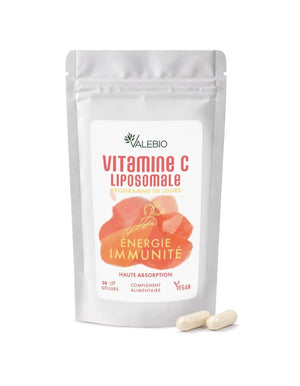
At the time of seasonal changes, in preparation for winter, in case of a pollution peak in your environment, or simply if you are deficient in vitamin C, it can be interesting to resort to supplementation. You can, for example, do a course by taking vitamin and vitamin C dietary supplements, especially in the form of tablets.
How to incorporate vitamin C into your skincare routine?
Yodi's tips:
• Apply your vitamin C products in the morning and/or evening on clean, dry skin. If you choose to apply it only once a day, opt for the morning to benefit even more from its sun protection properties.
• Don't panic: vitamin C is not photosensitizing. On the contrary, it reduces the skin's sensitivity to UV rays!
• Try to incorporate a high-quality, natural-origin, and properly dosed vitamin C into your skincare routine.
• Pay attention to your diet to avoid deficiencies: opt for foods – fruits and vegetables – naturally rich in vitamin C, even if they have little visible effect on the skin. Your health is also important!
• Supplementation: in case of deficiency or seasonal changes, do a vitamin C course in prevention, to help your body regain an appropriate and complete nutrition.
Precautions and contraindications
In general, products containing vitamin C are not dangerous to health and do not present any particular risks.
Indeed, the vitamin C present in these products is now microencapsulated, which therefore allows for a less acidic pH, closer to that of the skin and therefore less irritating than before.
As a precaution, it is recommended to favor the use of vitamin C creams rather than serums because the latter are less concentrated and therefore potentially less irritating.
Furthermore, it is not recommended to combine a vitamin C product with another potentially irritating active ingredient such as retinol or a fruit acid.
Finally, it is preferable to apply the vitamin C product only in the morning OR evening.
Although vitamin C products are mostly intended for all skin types, the most sensitive skin may experience certain side effects. Indeed, when the concentration of vitamin C is too high, for example, sensitive skin may experience itching, skin irritation, tingling, or even burning. If this is your case, for safety, do not wait any longer and adapt your skincare routine to avoid the risk of complications!
Remember to store your vitamin C products properly away from light and close them tightly after use.
Discover our natural vitamin C products
Yodi recommends its 100% vitamin-packed and antioxidant routine, and above all, without preservatives! Combine the Vitamin C and Hibiscus Flower Powder Facial Cleanser with the Muesli & Pure Vanilla Precious Oil and/or as a supplement with the super anti-wrinkle oil serum Plant-Based Retinol-Like.
Our facial cleanser is enriched with ascorbyl glucoside, a stabilized natural vitamin C derivative that provides visible results: a brighter complexion and reduced dark spots.
This vitamin C derivative has a stability that resists discoloration and degradation, while retaining full biological activity that provides brightening, anti-UV, and anti-aging properties. Our cleanser contains 2% vitamin C, an optimal concentration that helps brighten the skin and plays a role in the prevention and reduction of hyperpigmentation spots (age spots, acne, pregnancy, etc.).

Indeed, a clinical study conducted on 60 female volunteers showed that a product formulated with 2% ascorbyl glucoside significantly increased the brightness of their skin after 2 months of use.
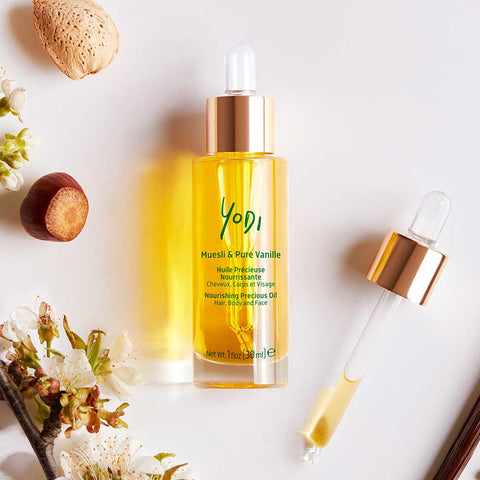
And that's not all! You can also use our Muesli & Pure Vanilla Precious Oil, composed of a blend of nourishing oils and pure vanilla, enriched with Vitamin E which helps fight the free radicals responsible for skin aging.
Our Plant-Based Retinol-Like Oil Serum concentrated in Bakuchiol, prebiotic, and vitamin E is also perfectly suited. Results: the skin is regenerated and signs of aging are reduced.
